
Preliminary reference disclaimer
This preliminary safety reference is generated from structured MolGraph catalog fields and public reference-style data. It is not a supplier-issued Safety Data Sheet and should not be used as a substitute for supplier-issued documentation, workplace safety review, transport classification, or regulatory compliance decisions. For supplier SDS or COA, submit a documentation request through MolGraph.
Documentation status
Preliminary safety reference
Available
Supplier-issued SDS
Available by request
COA
Available by RFQ / lot confirmation
Transport classification
Requires shipment review
Identity
CAS Number
1005174-17-3
Chemical name
(E)-3-(2-Propyl-6-(trifluoromethyl)pyridin-3-yl)acrylic acid
Molecular formula
C12H12F3NO2
Molecular weight
259.22 g/mol
Synonyms
3-(2-propyl-6-(trifluoromethyl)pyridin-3-yl)acrylic acid; (E)-3-[2-propyl-6-(trifluoromethyl)pyridin-3-yl]prop-2-enoic acid; s11357; F516569; (E)-3-(2-Propyl-6-(trifluoromethyl)pyridin-3-yl)acrylicacid; (E)-3-[2-propyl-6-(trifluoromethyl)-3-pyridyl]prop-2-enoic acid
InChIKey
CNCIJHJOEHBPBF-FNORWQNLSA-N
PubChem CID
68780604
Hazard / GHS Reference
GHS Pictograms
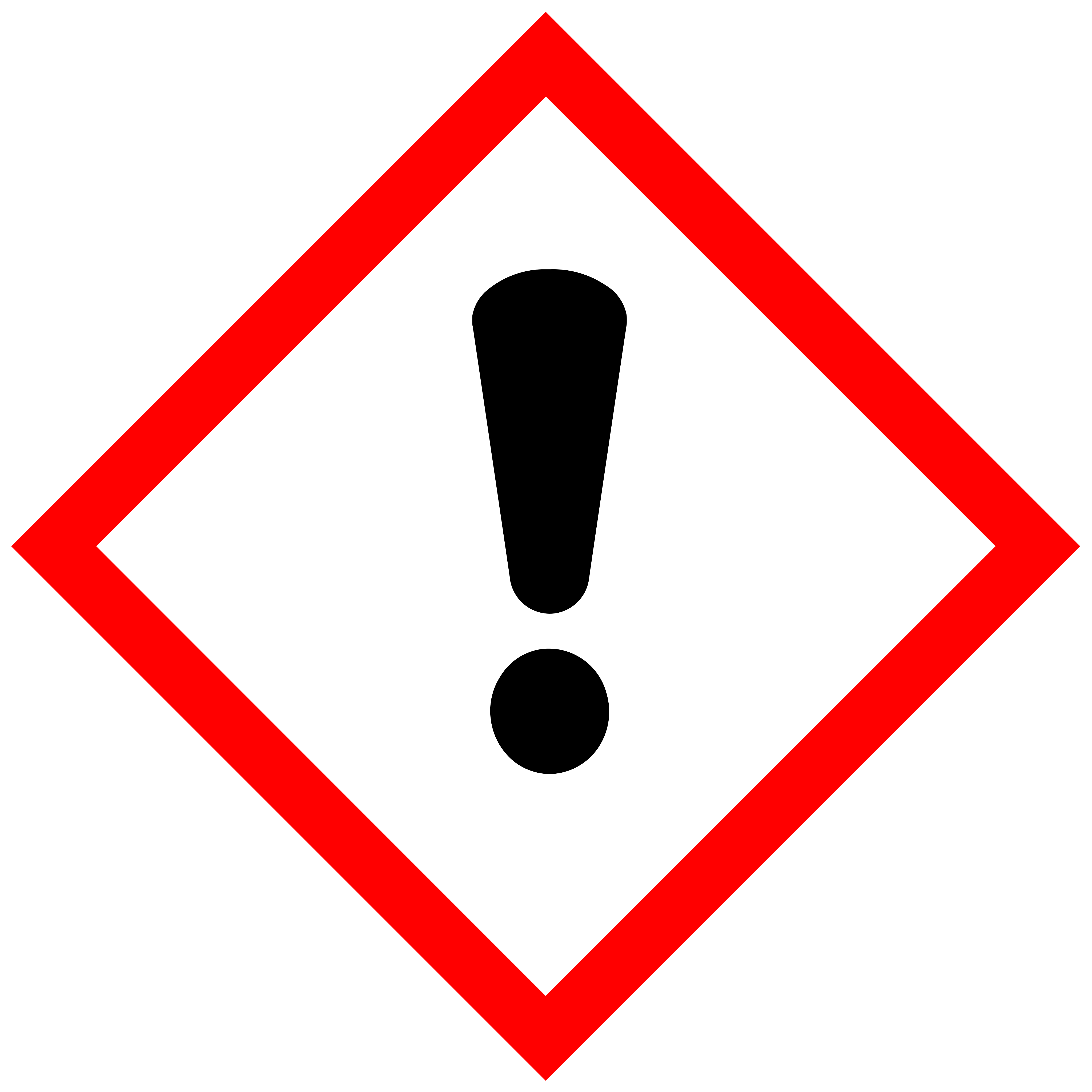
Catalog reference cue; confirm supplier documentation before use.
Handling & PPE
- Handle in a well-ventilated area or fume hood.
- Avoid contact with skin, eyes, and clothing.
- Keep container tightly closed in a dry and cool place.
- Store away from incompatible materials.
- Wash thoroughly after handling.
- Wear a lab coat or protective clothing.
- Wear compatible protective gloves.
- Wear eye protection, such as safety goggles or a face shield.
- Use respiratory protection if ventilation is inadequate or exposure limits are exceeded.
First Aid / Accidental Release
- In case of contact, immediately flush eyes with plenty of water for at least 15 minutes.
- Wash skin with soap and plenty of water.
- If inhaled, move to fresh air. If not breathing, give artificial respiration.
- If swallowed, rinse mouth with water. Do not induce vomiting.
- Seek medical attention if irritation persists or symptoms develop.
- Avoid dust formation and breathing vapors or mist.
- Ensure adequate ventilation during cleanup.
- Wear appropriate personal protective equipment.
- Collect spilled material using an inert absorbent.
Firefighting / Stability
- Use water spray, dry chemical, carbon dioxide, or appropriate foam.
- Wear self-contained breathing apparatus for firefighting if necessary.
- Keep containers cool with water spray in case of fire.
- Prevent runoff from fire control from entering waterways.
- Stable under recommended storage conditions.
- Avoid strong oxidizing agents.
- May react with strong bases or acids.
- Hazardous decomposition products may include carbon oxides, nitrogen oxides, and hydrogen fluoride.
Physical and Chemical Reference
Appearance
white crystalline powder
Catalog reference value; verify against supplier SDS before use.
Physical State
solid
Catalog reference value; verify against supplier SDS before use.
Melting Point
150.0 °C
Catalog reference value; verify against supplier SDS before use.
Density
1.3 g/cm³
Catalog reference value; verify against supplier SDS before use.
Water Solubility
sparingly soluble
Catalog reference value; verify against supplier SDS before use.
Flash Point
250.0 °C
Catalog reference value; verify against supplier SDS before use.
Vapor Pressure
Estimated very low; unit not specified
Catalog reference value; verify against supplier SDS before use.
Autoignition Temp
350.0 °C
Catalog reference value; verify against supplier SDS before use.
Transport / Shipment Review
HS Code
293339
Preliminary catalog cue; verify before compliance decisions.
GHS Pictograms
Preliminary catalog cue; verify before compliance decisions.
Compliance
standard-ruo
Preliminary catalog cue; verify before compliance decisions.
Registration Status
DSL: pending; AICS: pending; ENCS: pending; ICSR: pending; TSCA: pending; IECSC: pending; INSQR: pending; REACH: pending; K-REACH: pending; SEA_Regulatory: pending
Registration values are catalog reference status cues and may require jurisdiction-specific review.
Shipment review
Shipment details require review before fulfillment.
Transport classification must be confirmed using supplier SDS and shipment documentation before dispatch.
- Transport classification must be confirmed using supplier SDS and shipment documentation before dispatch.